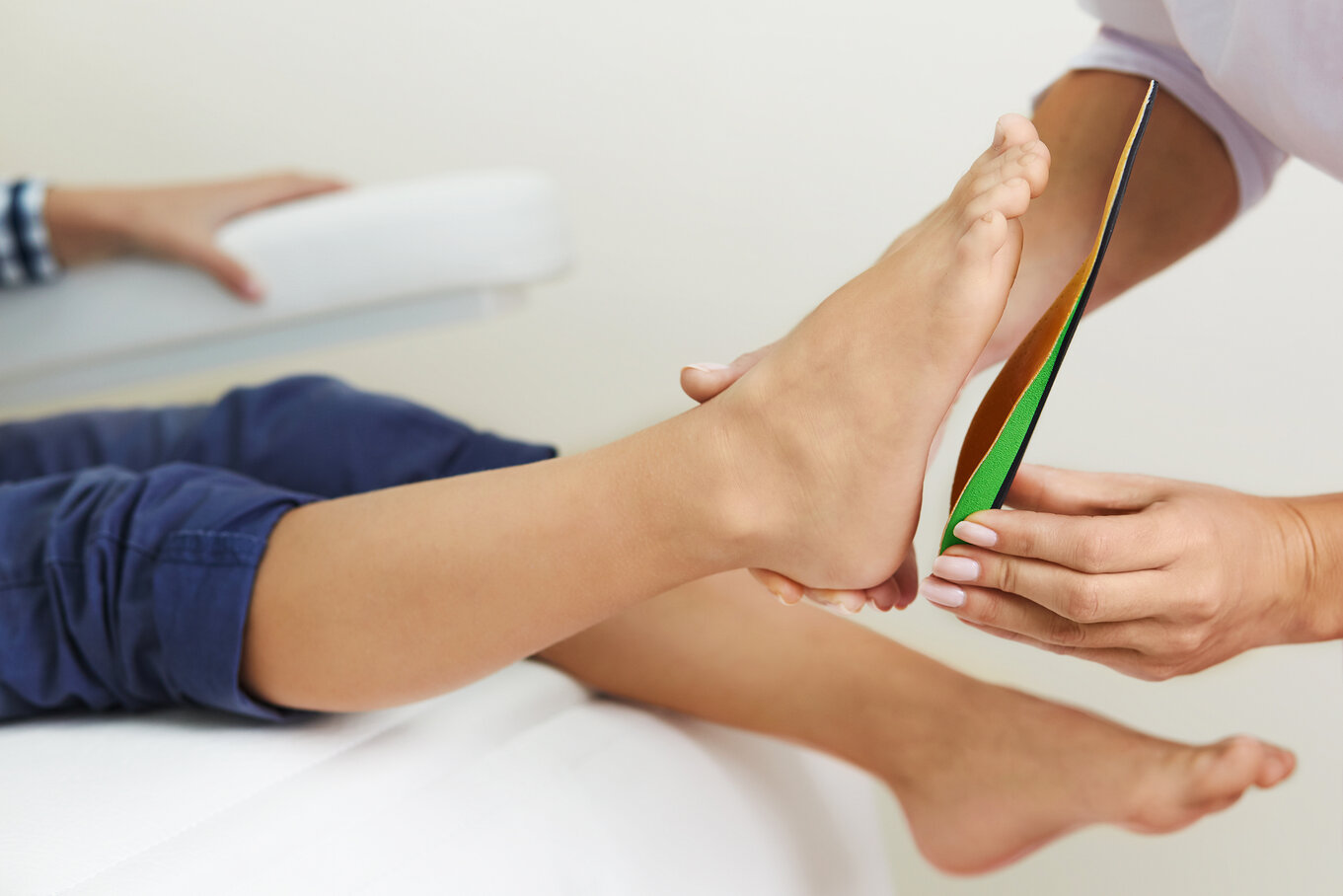
Orthopedic insoles. Fitting orthotic insoles. Flatfoot treatment. Podiatry clinic.
Orthotics are devices worn inside shoes, and they support the feet and ankles. Shoe inserts are available over the counter, but custom orthotics are prescribed by a podiatrist for individual needs. They may be used to address specific issues, and providers fit them to match the shape of each foot. Not all insoles are the same, as some are made to address medical issues and others for comfort.
What Are Symptoms?
Swelling or pain in the foot during daily activity may prompt evaluation for orthotics. Some people notice unusual shoe wear patterns, and others see changes in gait after an injury. Flat feet or high arches can change how weight is distributed, and these conditions may also contribute to discomfort. Uneven balance and frequent stumbles may indicate a structural issue, and this is sometimes managed with a custom device. There are situations where diabetes or lower limb injuries are present, and these cases may also call for orthotic intervention. If one or more symptoms occur, a podiatrist can recommend custom orthotics for tailored support.
What Do Orthotics Do?
Orthotics help align the feet and ankles and provide structural support. These devices guide walking motion, and they can redistribute pressure across the foot. Orthotics may be simple or specialized, and the level of support is based on the user’s condition. Store-bought shoe inserts are commonly made with soft foam or gel, and they offer universal support. Custom orthotics use a mold or digital image for a fit designed to suit individual anatomy, and they can be made with a range of materials. Two major custom types exist, and Podiatrists classify them by function.
The first is known as functional orthotics, made with semi-rigid components, they address foot motion and may be used to support certain injuries. These orthotics aim to control abnormal movement, and they help guide natural stepping patterns. The second is accommodative orthotics, which are constructed from flexible, soft materials; they add cushioning and target areas subject to excess pressure. These are typically used for providing comfort and reducing rubbing in specific regions.
The choice between types depends on the condition, and specialists select the material and design to fit the user’s daily needs.
What is Recovery Time?
Initial orthotic use requires a brief adjustment period, and the body may take time to respond to new alignment. Most people begin with a few hours of wear, but providers recommend a gradual increase as tolerance improves. It may take up to a month for users to adapt to wearing custom orthotics, and full-time use is suggested where needed.
The duration of use depends on the individual and the advice received. The user may need orthotics as long as symptoms or risk factors persist. Orthotics generally do not change underlying anatomy, and symptoms may return if use stops suddenly. Device longevity varies based on materials, weight, and activity, and regular cleaning or inspection keeps them functional longer.
Find A Podiatrist
Orthotics are prescribed for specific biomechanical needs, and providers use various designs and materials. Some people use them as part of ongoing care, while others may need them after injury or with chronic conditions. Anyone considering orthotics should consult a foot or ankle specialist, and they can discuss diagnosis, usage, and expectations.
About the Author